
Introduction
Web development is the process of creating and maintaining websites and web applications. From simple business websites to complex e-commerce platforms and AI-powered applications, web development plays a crucial role in the digital world.
As technology continues to evolve, developers must stay updated with modern tools, frameworks, and best practices to build fast, secure, and user-friendly websites.
What Is Web Development?
Web development involves designing, building, and maintaining websites and web applications. It generally consists of three major areas:
1. Frontend Development
Frontend development focuses on the part of a website that users see and interact with.
Popular technologies include:
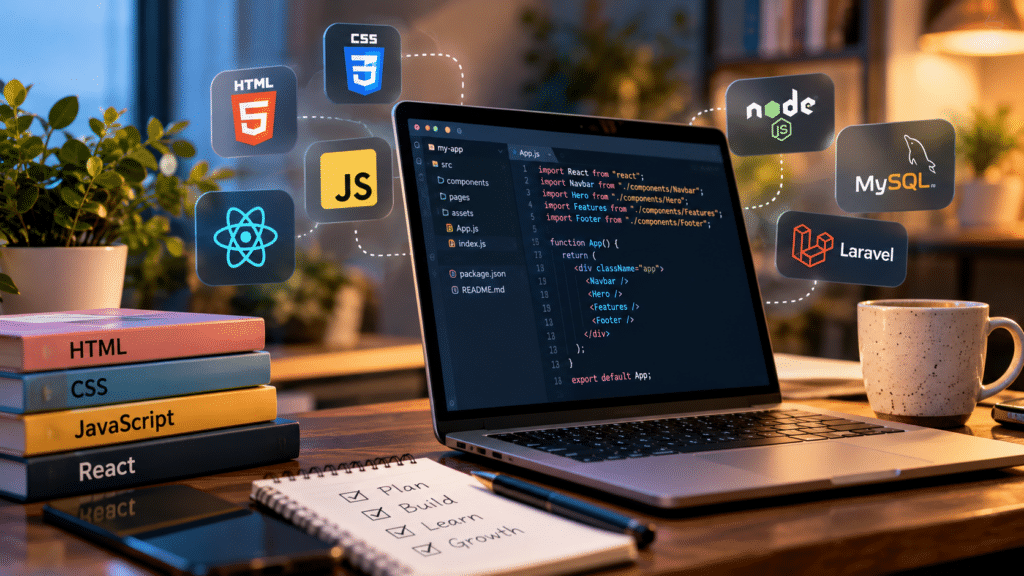
- HTML for structuring web pages.
- CSS for styling and layouts.
- JavaScript for interactivity.
- React and Next.js for building modern web interfaces.
2. Backend Development
Backend development handles the server-side logic, databases, authentication, and APIs that power a website.
Common technologies include:
- Node.js and Express.js
- PHP and Laravel
- Python and Django
- Java and Spring Boot
3. Full-Stack Development
Full-stack development combines frontend and backend development. Full-stack developers can work across the entire application, from building user interfaces to managing databases and server-side logic.
Latest Web Development Trends
Artificial Intelligence Integration
AI is transforming web development by enabling intelligent chatbots, personalized user experiences, automated content generation, and AI-powered search functionality.
Responsive Web Design
Modern websites must work smoothly across desktops, tablets, and smartphones. Responsive design helps ensure that users receive a consistent experience regardless of screen size.
Progressive Web Apps
Progressive Web Apps (PWAs) combine features of websites and mobile applications, offering capabilities such as offline access and installable experiences where supported.
API-Driven Architecture
APIs allow different systems to communicate and exchange data. REST APIs and GraphQL are widely used to connect frontend applications with backend services and external platforms.
Website Performance and Security
Fast-loading pages and secure applications are essential for a positive user experience. Developers should optimize images, reduce unnecessary JavaScript, implement secure authentication, validate inputs, and keep dependencies updated.
Best Practices for Modern Web Development
To build reliable and maintainable websites, developers should follow these practices:
- Write clean, reusable, and maintainable code.
- Use semantic HTML and accessible design principles.
- Optimize page speed and loading performance.
- Follow secure coding practices and validate user input.
- Design for mobile devices and different screen sizes.
- Use Git for version control and collaboration.
- Test applications before deployment.
- Monitor website performance and fix issues regularly.
Why Web Development Matters for Businesses
A well-developed website helps businesses establish credibility, reach a wider audience, showcase products and services, and improve customer engagement.
Modern web applications can also automate business processes, integrate third-party services, and provide data-driven insights that support better decision-making.
Conclusion
Web development continues to evolve with advancements in AI, modern frameworks, cloud technologies, and security practices. Whether you are a beginner learning HTML and CSS or an experienced developer building full-stack applications, continuous learning is essential.
By choosing the right technologies and following established development practices, developers can create scalable, secure, and high-performing web applications that meet the needs of modern users.
Start building, keep experimenting, and continue learning—because the future of web development belongs to those who adapt.