
Post Date: May 3, 2020
Last Updated: November 12, 2026
Introduction
Check PHP version in cPanel to identify which PHP version is currently configured for your website. PHP is a widely used server-side scripting language for developing dynamic websites and web applications. PHP stands for Hypertext Preprocessor.
Knowing the PHP version is important for checking application compatibility, troubleshooting website issues, and ensuring that your website works with the required PHP configuration.
In this article, we will explain how to check the PHP version using the Server Information section and how to find the PHP version assigned to a specific domain using MultiPHP Manager.
Prerequisites
Before checking the PHP version in cPanel, make sure you have the following:
- Active cPanel login credentials (username and password).
- Access to the cPanel hosting account.
- A stable internet connection.
- Permission to access the Server Information section.
- Access to MultiPHP Manager if you need to check the PHP version assigned to a specific domain.
Note: MultiPHP Manager availability depends on your hosting provider’s server configuration.
Implementation
Follow the steps below to view the PHP version through your cPanel account.
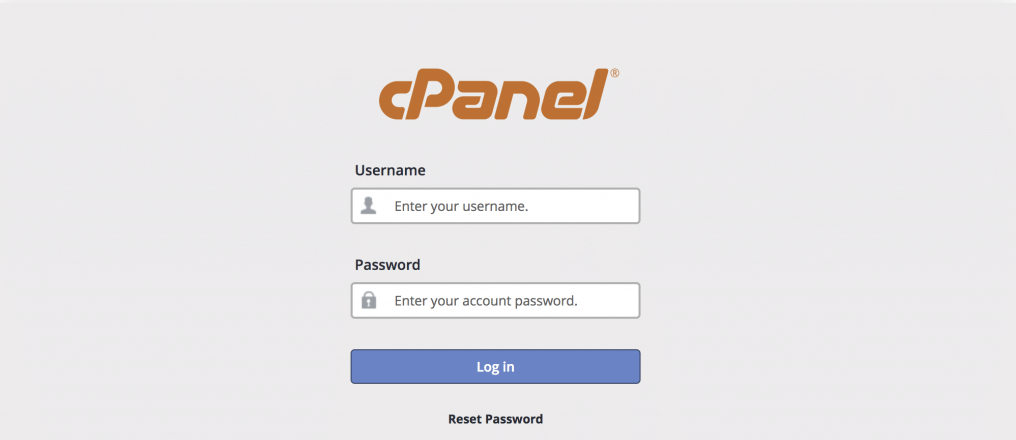
Step 1: Log in to cPanel.
First, log in to your cPanel account using your cPanel username and password.
After logging in, you will see the cPanel dashboard.
Step 2: Open Server Information
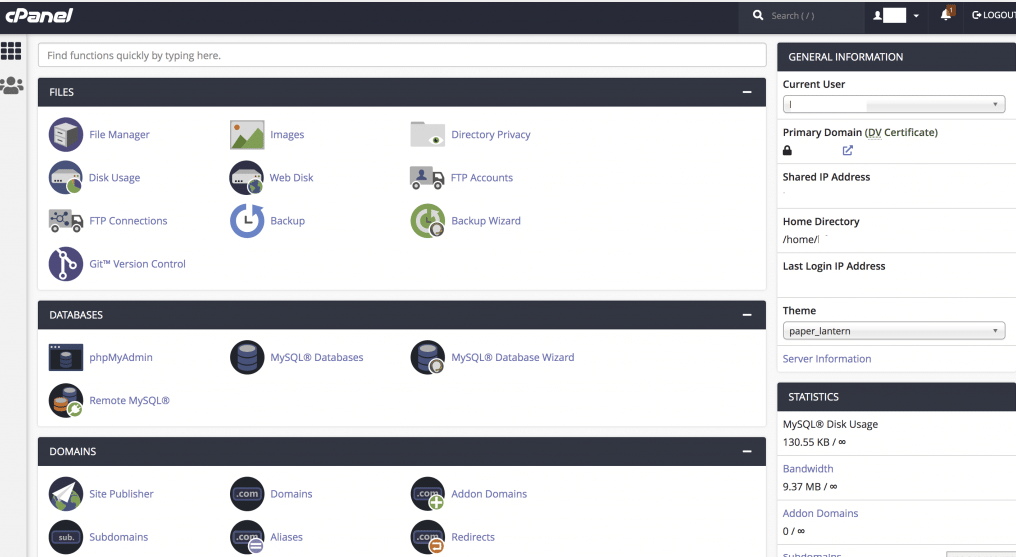
Under the General Information section on the right side of the cPanel dashboard, click Server Information.
This section displays information about your hosting server and its software configuration.
Step 3: Find the PHP Version
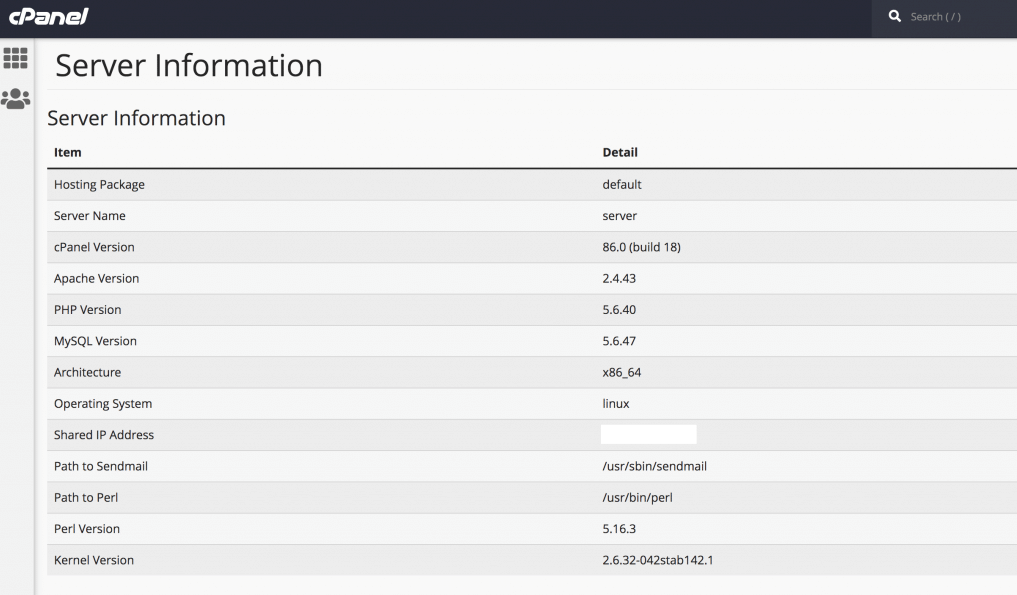
On the Server Information page, locate the PHP Version entry under the Item column.
The corresponding version number will be displayed under the Detail column.
You can use this information to identify the PHP version reported by the server.
How to Check the PHP Version Assigned to a Specific Domain
If your cPanel account hosts multiple domains, each domain may use a different PHP version depending on the hosting configuration.
To check the PHP version assigned to a particular domain:
- Log in to your cPanel account.
- Search for MultiPHP Manager.
- Open MultiPHP Manager.
- Find your domain in the domain list.
- Check the PHP version displayed next to that domain.
If MultiPHP Manager is available and enabled by your hosting provider, this is the appropriate place to check the PHP version assigned to an individual domain.
Note: The PHP version displayed in Server Information may represent the server’s PHP configuration. It may not always match the PHP version assigned to a particular domain.
Conclusion
Checking the PHP version helps website administrators understand their hosting environment and identify PHP compatibility requirements.
You can use the Server Information section in cPanel to view the server’s PHP version. If you need to check the PHP version configured for a specific domain, use MultiPHP Manager, if available.
FAQs
1. How can I check the PHP version in cPanel?
Log in to cPanel, navigate to the General Information section, and click Server Information. You can find the PHP version under the Item and Detail columns.
2. How do I check the PHP version for a specific domain in cPanel?
Open MultiPHP Manager in cPanel, locate your domain, and check the PHP version assigned to it.
3. Can I change the PHP version for my domain using cPanel?
Yes. If your hosting provider enables MultiPHP Manager, you can select your domain and choose an available PHP version.
Related Articles
Official Documentation
- Learn how to view and manage PHP versions assigned to individual domains.
- Official API documentation for retrieving cPanel server information.
How Pheonix Solutions Can Help
Managing PHP versions is important for maintaining website compatibility, performance, and security.
Pheonix Solutions provides web development, application development, cloud solutions, and DevOps services to help businesses maintain reliable and scalable digital solutions.
Our experts can help you manage PHP configurations, troubleshoot website compatibility issues, and maintain your web applications.
Contact our experts to discuss your website requirements.