
Post Date: January 6, 2019
Last Updated: October 03, 2026
Introduction
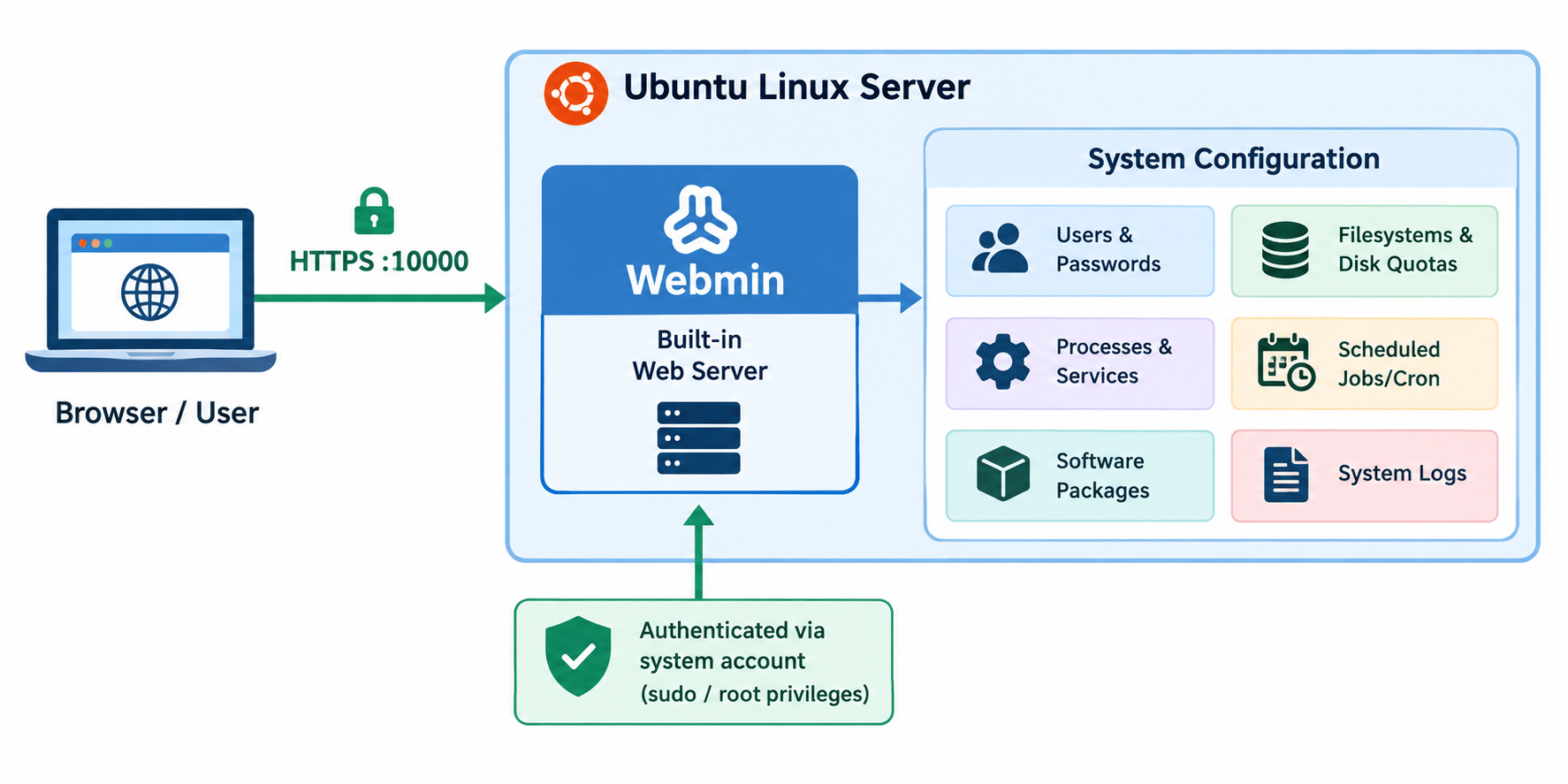
Webmin is a web-based configuration tool for Unix-like systems (Linux, Solaris, FreeBSD), letting you manage passwords, filesystems, processes, disk quotas, scheduled jobs, software packages, system logs, and more through a browser instead of the command line.
One note upfront: Ubuntu 18.04 reached end of standard support in April 2023. The steps below still work on 18.04 if you’re maintaining an existing system, but for a new server, a current Ubuntu LTS release (22.04 or 24.04) is the better foundation — the same install process applies either way.
Prerequisites
- Ubuntu (ideally a currently supported LTS release)
- Root or sudo access
Confirm your Ubuntu version:
cat /etc/os-release
Architecture
- Webmin runs as its own web server, listening on port 10000
- It reads and writes real system configuration files directly (user accounts, services, packages, etc.)
- You access it through a browser over HTTPS, authenticating with a system account that has sudo/root access
Steps
1. Install Dependencies
sudo apt install -y perl libnet-ssleay-perl openssl libauthen-pam-perl libpam-runtime libio-pty-perl apt-show-versions apt-transport-https
Note: The original list included
python. Current Ubuntu versions (20.04+) no longer package Python 2 at all, soapt install pythonwill fail outright on a current system. Webmin’s dependencies don’t strictly require it either way — if a specific Webmin module you use needs Python, installpython3instead.
2. Add the Webmin Repository
echo "deb https://download.webmin.com/download/repository sarge contrib" | sudo tee /etc/apt/sources.list.d/webmin.list
Note:
sargehere is just Webmin’s long-standing, generic repository codename — it’s unrelated to any specific Debian or Ubuntu release and applies across versions. It looks unusual, but it’s correct as written.
3. Add Webmin’s GPG Key
wget https://download.webmin.com/jcameron-key.asc
sudo gpg --dearmor -o /usr/share/keyrings/webmin.gpg jcameron-key.asc
Note: The original used
apt-key add, which is deprecated and has been removed entirely on current Ubuntu versions. The current approach stores the key as a dedicated keyring file instead, referenced explicitly in the next step.
4. Reference the Key in Your Repository Entry
Update the repository line from Step 2 to reference the keyring explicitly:
echo "deb [signed-by=/usr/share/keyrings/webmin.gpg] https://download.webmin.com/download/repository sarge contrib" | sudo tee /etc/apt/sources.list.d/webmin.list
5. Update and Install Webmin
sudo apt update
sudo apt install -y webmin
6. Control the Webmin Service
sudo systemctl start webmin
sudo systemctl stop webmin
sudo systemctl restart webmin
sudo systemctl status webmin
7. Access the Webmin Interface
https://your-ipaddress:10000
Note: Webmin uses a self-signed certificate by default, so your browser will show a security warning on first visit — this is expected. For production use, replace it with a properly signed certificate.
Log in with your root password, or any user account that can use sudo.
Conclusion
Installing Webmin on Ubuntu comes down to adding its repository and GPG key correctly, then a standard apt install. The main things that changed since the original guide: apt-key no longer works and needs the signed-by approach instead, HTTP links should be HTTPS, and python (Python 2) is no longer installable on current Ubuntu at all.
Frequently Asked Questions
Why did “apt install python” fail for me? Current Ubuntu versions (20.04+) don’t ship Python 2 at all — that exact package name no longer exists. Install python3 instead if something specifically needs Python.
Is the browser security warning on first login a problem? No — it’s expected, since Webmin uses a self-signed certificate by default. Replace it with a real certificate if you want to avoid the warning for a production-facing instance.
Can I restrict who can access Webmin? Yes — Webmin has its own user/permission system separate from system accounts, and you can also restrict access at the firewall level to specific IPs if it’s only needed internally.
Related Articles
How to Lock and Unlock a User on Ubuntu 24.04?
Installing and Setting Up Trivy Vulnerability Scanner on Ubuntu/Debian
Talk to Our Technology Experts
Looking for an easier way to manage your Linux servers? Our team can help with server administration, control panel setup, and ongoing support.