
Introduction
cPanel is widely used for managing web hosting servers and DNS records. A DNS cluster allows multiple cPanel servers to synchronize DNS zone information between them.
In this setup, we will configure two cPanel DNS-only servers as nameservers and connect them to a cPanel web server. The nameservers (ns1 and ns2) will receive and synchronize DNS records from the cPanel web server.
cPanel DNS-Only can be used as a dedicated DNS server without hosting websites on the DNS-only servers.
Prerequisites
Before starting, make sure you have:
- Two cPanel DNS-Only servers with WHM access.
- One cPanel web server with WHM access.
- Root or WHM access to all three servers.
- The required DNS records and nameservers configured for the domains.
For this example, we will use:
ns1– DNS-only server 1ns2– DNS-only server 2- cPanel web server – Main hosting server
The ns1 and ns2 servers will fetch DNS records from the cPanel web server.
Implementation
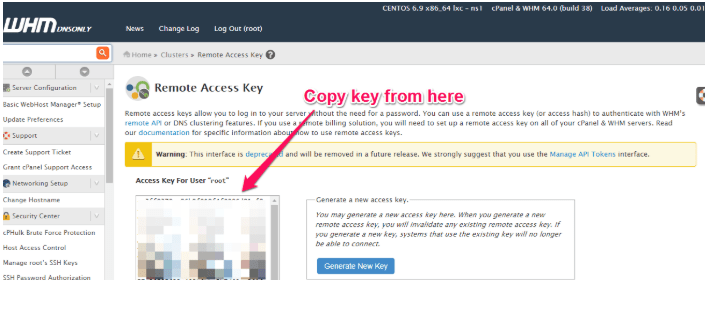
Step 1: Get the Remote Access Key from ns1.
Log in to WHM on the first DNS-only server:
https://IP:2087
Navigate to:
Home → Clusters → Remote Access Key
The remote access key is required to authenticate communication between the cPanel servers.
Step 2: Open DNS Cluster on the cPanel Web Server
Log in to WHM on the cPanel web server:
https://IP:2087
Navigate to:
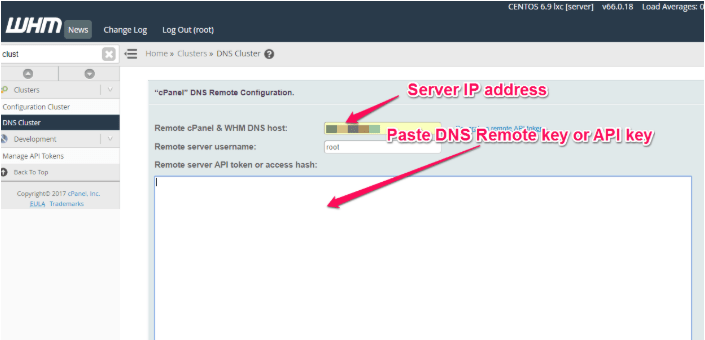
Home → Clusters → DNS Cluster
Click:
Enable DNS Clustering
Step 3: Add ns1 to the DNS Cluster
Under Add a new server to the cluster, select:
Backend Type: cPanel
Enter the required details for the ns1 DNS-only server, including its IP address and remote access credentials.
Step 4: Select Synchronization Mode
Select:
Synchronize Changes
This option is used when DNS changes made on the cPanel web server should be propagated to the connected DNS server.
The available synchronization options are:
Synchronize Changes
All changes made on this server will propagate to linked servers in the cluster.
Synchronization is one-way. Changes made on another server will not propagate back unless the other server is also configured to synchronize changes.
Standalone
Changes made on this server will not propagate to other servers in the cluster.
Write-only
This server writes changes to the remote server, but changes made on the remote server are not propagated back to this server.
Step 5: Add ns2 to the Cluster
Repeat the same configuration for the second DNS-only server.
Add the ns2 server to the DNS Cluster on the cPanel web server and configure the required synchronization settings.
After adding both DNS-only servers, the setup will contain:
             cPanel Web Server
                    |
          ---------------------
          |                   |
         ns1                 ns2
    DNS-Only Server     DNS-Only Server
Step 6: Verify the DNS Cluster
After successfully adding both DNS-only servers, the DNS Cluster section in WHM should display the configured servers and their synchronization relationships.
You should see a DNS cluster diagram showing the cPanel web server connected to ns1 and ns2.
This confirms that the DNS servers have been added to the cluster.
Conclusion
A cPanel DNS Cluster provides a convenient way to distribute DNS records across multiple servers. In this configuration, the main cPanel web server manages the DNS zones, while the two DNS-only servers act as dedicated nameservers.
Using Synchronize Changes allows DNS updates made on the web server to be propagated to the connected DNS servers, helping maintain consistent DNS records across the cluster.
FAQs
1. What is a cPanel DNS Cluster?
A cPanel DNS Cluster connects multiple cPanel or DNS-only servers so that DNS zone information can be distributed and synchronized between them.
2. Why use two DNS-only servers?
Using two dedicated DNS servers provides separate nameserver endpoints and helps distribute DNS service across multiple servers.
3. What is the Synchronize Changes option?
Synchronize Changes propagates DNS changes from one server to connected servers in the configured cluster.
4. Where can I configure the DNS cluster in WHM?
Go to:
WHM → Clusters → DNS Cluster
5. What is the Remote Access Key used for?
The Remote Access Key is used to authenticate communication between cPanel servers when configuring remote services such as DNS clustering.
Related Articles
DNS Not Working in VestaCP
Learn how to troubleshoot DNS-related issues in VestaCP and identify common configuration problems.
https://pheonixsolutions.com/blog/dns-not-working-vestacp/
How Do I Flush a Computer DNS Cache?
Learn how to clear the DNS cache on a computer when troubleshooting DNS resolution and propagation issues.
https://pheonixsolutions.com/blog/how-do-i-flush-a-computer-dns-cache/
Talk to our experts.
Looking for the right technology solution for your business? Our team of experts can help you with development, cloud, DevOps, design, and a wide range of other technology needs. Get in touch with our team here.