

Post Date: March 7, 2020
Last Updated: November 12, 2026
Introduction
jQuery is a popular JavaScript library that simplifies HTML document manipulation, event handling, animations, and other web development tasks. One of its useful features is jQuery Effects, which allows developers to add interactive visual effects to HTML elements.
jQuery provides several built-in effect methods that can be used to show, hide, and animate HTML elements without writing complex JavaScript code.
In this blog, we will explore some commonly used jQuery Effects methods, including hide(), toggle(), fadeIn(), fadeOut(), fadeTo(), and fadeToggle(), with syntax and practical examples.
1. jQuery hide() Method
The hide() method is a built-in jQuery effect method used to hide the selected HTML elements. When this method is executed, the selected element gradually disappears if a duration is specified.
Syntax:
$(selector).hide(duration, easing, callback);
Parameters:
duration: Specifies how long the hiding animation takes (milliseconds).easing: Specifies the speed of the animation at different points.callback: A function executed after the animation completes.
Example:
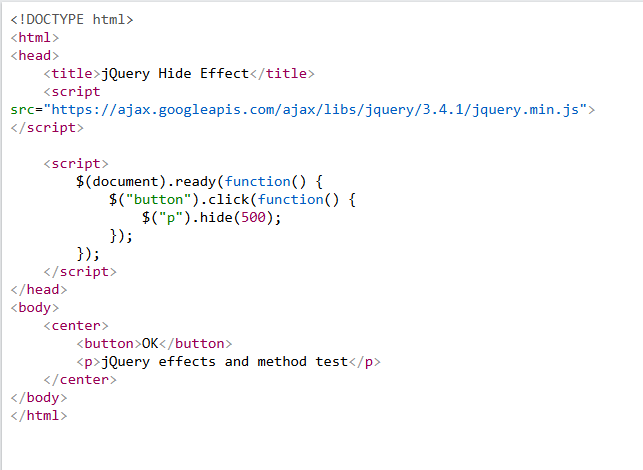
Explanation:
When the user clicks the OK button, the hide() method hides the paragraph element with a 500-millisecond animation.
Before clicking the button:

After clicking the button:

2. jQuery toggle() Method
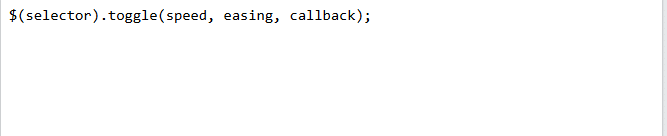
The toggle() method is used to switch between showing and hiding selected HTML elements.
If an element is visible, the toggle() method hides it. If the element is hidden, it displays it again.
Syntax:
Example:
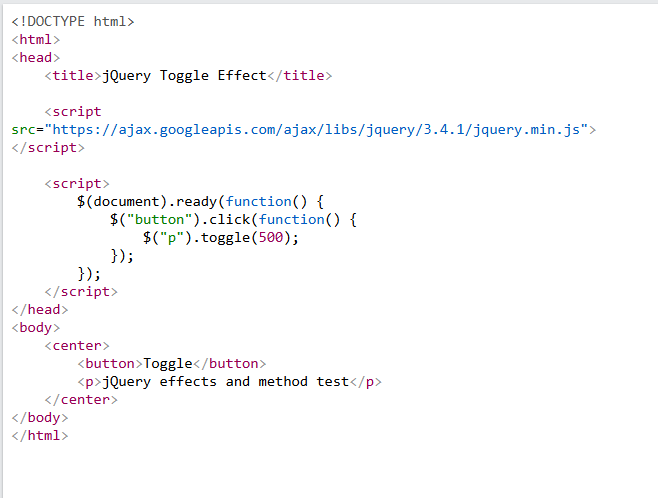
Explanation:
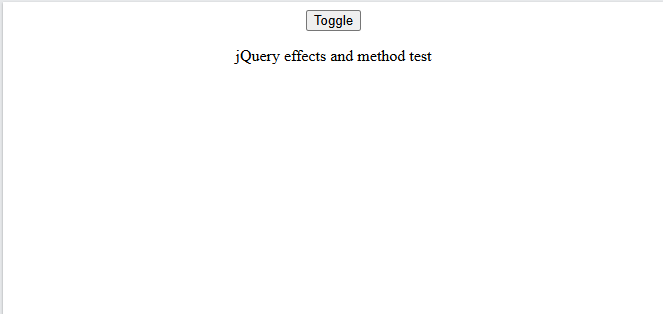
When the user clicks the Toggle button, the paragraph element switches between visible and hidden states using a 500-millisecond animation.
- First click: Hides the paragraph.
- Second click: Displays the paragraph again.
- Subsequent clicks: Continues switching between the two states.
Before clicking the button:
After clicking the button:

3. jQuery Fade Effects
jQuery provides fade effect methods to control the visibility and opacity of HTML elements.
These methods are useful for creating smooth visual transitions in web applications.
The commonly used jQuery fade methods are:
| Method | Description |
|---|---|
fadeIn() | Gradually displays a hidden element. |
fadeOut() | Gradually hides a visible element. |
fadeTo() | Changes the opacity of an element to a specified value. |
fadeToggle() | Switches between fadeIn() and fadeOut(). |
jQuery fadeIn() Method
The fadeIn() method gradually displays hidden HTML elements by increasing their opacity.
Syntax:
$(selector).fadeIn(speed, easing, callback);
jQuery fadeOut() Method
The fadeOut() method gradually hides visible HTML elements by decreasing their opacity.
Syntax:
$(selector).fadeOut(speed, easing, callback);
jQuery fadeTo() Method
The fadeTo() method changes the opacity of the selected HTML element to a specified value.
Syntax:
$(selector).fadeTo(speed, opacity, easing, callback);
The opacity value ranges from 0 (completely transparent) to 1 (fully visible).
jQuery fadeToggle() Method
The fadeToggle() method switches between the fadeIn() and fadeOut() effects.
If the selected element is visible, it gradually fades out. If it is hidden, it gradually fades in.
Syntax:
$(selector).fadeToggle(speed, easing, callback);
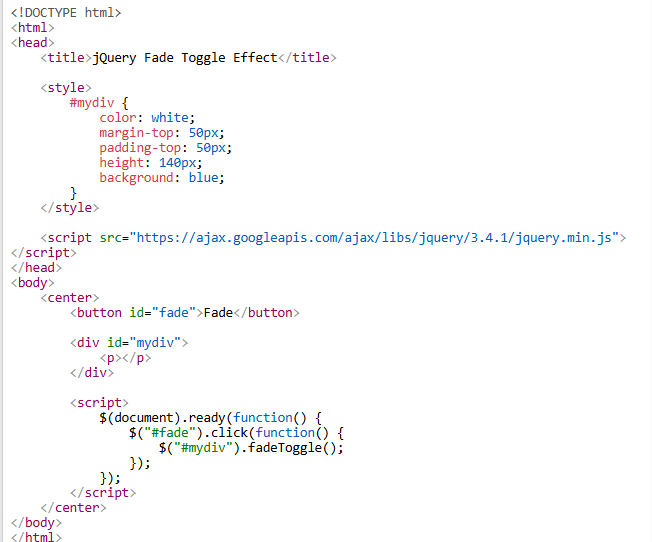
Example:
Explanation:
In this example, the fadeToggle() method is applied to the mydiv element.
When the user clicks the Fade button:
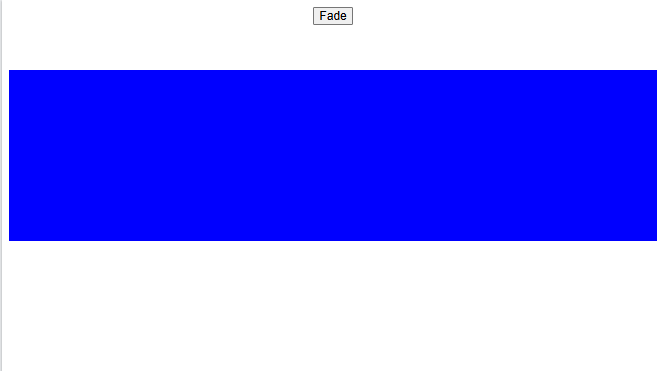
- First click: The blue div gradually fades out.
- Second click: The blue div gradually fades in.
- Subsequent clicks: The visibility of the div continues to toggle.
Before clicking the button:
After clicking the button
Conclusion
jQuery Effects provide a simple and effective way to create interactive and visually appealing web pages. Methods such as hide(), toggle(), fadeIn(), fadeOut(), fadeTo(), and fadeToggle() help developers control the visibility and opacity of HTML elements with minimal code.
By understanding these built-in jQuery methods, developers can create smoother user interactions and improve the overall user experience of web applications.
These effects are especially useful for creating dynamic interfaces, interactive buttons, notifications, and animated content sections. Practising these methods with different HTML elements will help developers understand how jQuery animations work in real-world applications.
Frequently Asked Questions (FAQs)
1. What are jQuery Effects?
jQuery Effects are built-in methods used to add animations and visual transitions to HTML elements. They allow developers to show, hide, fade, and animate elements easily.
2. What is the difference between hide() and toggle() in jQuery?
The hide() method hides the selected HTML element, whereas the toggle() method switches between showing and hiding the element based on its current visibility.
3. What is the difference between fadeIn() and fadeOut() in jQuery?
The fadeIn() method gradually displays a hidden element, while the fadeOut() method gradually hides a visible element by changing its opacity.
Related Articles
How to use shift and unshift method in javascript
How to remove & install oracle java [Jdk] in ubuntu 16.0.4
Need Help with JavaScript Development?
Are you looking for professional assistance with JavaScript development, frontend optimization, web application development, or troubleshooting complex JavaScript issues?
Our development team at Pheonix Solutions can help you build, maintain, and optimize modern web applications using reliable development practices.
Get in touch with our team here to discuss your web development requirements.