
Post Date: October 04, 2018
Last Updated: September 26, 2026
Introduction
WinSCP (Windows Secure Copy) is a free and open-source file transfer client for Microsoft Windows that supports secure file transfer protocols such as SFTP, SCP, FTP, WebDAV, and Amazon S3. It provides a simple interface for transferring files between a local Windows computer and a remote server.
In this article, we will explain how to connect to a remote Linux server using WinSCP and securely transfer files from a Windows client machine to the remote server using either password-based or RSA private key authentication
Prerequisites
Before starting the file transfer, ensure the following requirements are met:
- A Windows client machine with Windows 8, Windows 10, or a supported newer version.
- WinSCP installed on the Windows client machine.
- Download WinSCP from the official website: https://winscp.net/eng/download.php
- Remote server hostname or IP address.
- Valid SSH username and password, or an RSA/SSH private key for key-based authentication.
- SSH/SFTP access enabled on the remote server.
- Appropriate permissions to access the destination directory on the remote server.
- Ensure the required SFTP/SSH port, typically TCP 22, is accessible from the Windows client.
Note: The screenshots in this article were created using WinSCP version 5.13.4. The interface may differ slightly in newer versions.
Implementation
Step 1: Log in to the remote server using WinSCP from the client machine.
You can log in with the listed details in the given figure using the remote password (If you’re using Key authentication, please follow the next step)
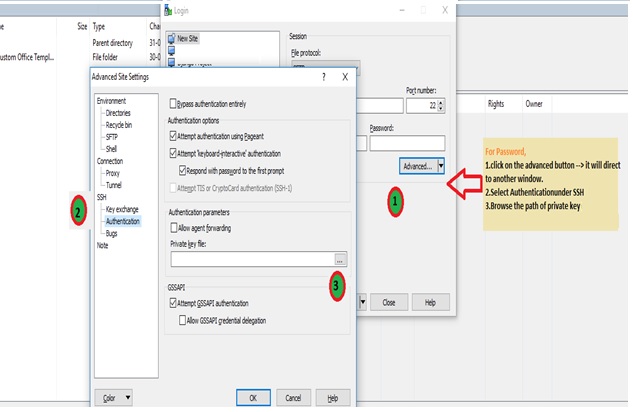
Step 2: Log in using the authentication Key.
We clearly explained the steps as {1,2,3} for authentication by RSA private key, and click Log in.
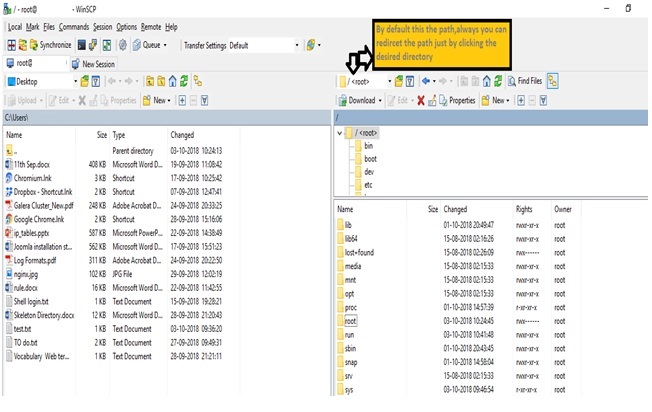
Step 3: How to access your server directory on WinSCP
Step 4 : File transfer from local machine to remote machine
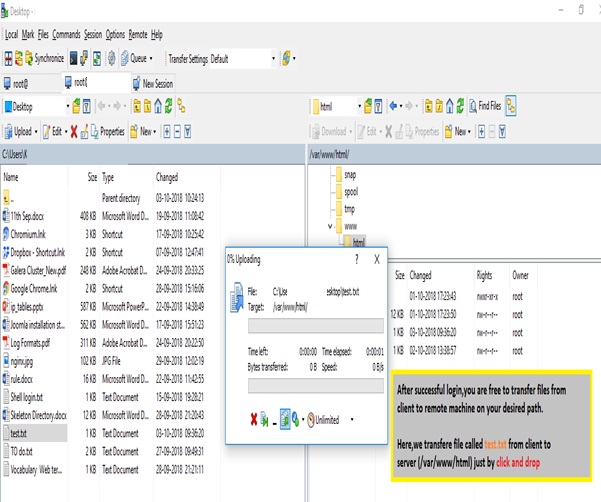
Yeah! Now you have successfully transferred a file from the local to the remote machine using password/private key authentication.
Please feel free to provide constructive feedback. Comments are greatly appreciated !
Conclusion
WinSCP provides a convenient and secure way to transfer files between a Windows client machine and a remote server. By using SFTP or SCP with password-based or private key authentication, files can be transferred securely while protecting authentication credentials and data during transmission.
Following the steps outlined in this article, users can establish a connection to the remote server, access the required directories, and transfer files between the local and remote systems efficiently.
FAQs
1. What is WinSCP used for?
WinSCP is a Windows-based file transfer client used to securely transfer files between a local Windows computer and a remote server using protocols such as SFTP and SCP.
2. Is WinSCP free to use?
Yes. WinSCP is free and open-source software for Windows.
3. Which protocol should I use for secure file transfer?
SFTP is generally recommended for secure file transfers because it operates over SSH and encrypts the connection between the client and server.
Related Articles
How to configure SSH Key access to a Linux server using Windows (client)
Talk to our experts
Need help with secure file transfers, remote server access, or Linux server management? Our experts can assist with WinSCP configuration, SFTP/SSH access, server security, and secure file transfer solutions. Get in touch with our team here.