
Have you ever opened a website and mobile app for the same service and noticed they show different information? Maybe a pass appears on one but not the other, or a session looks available in one place but not elsewhere. These inconsistencies confuse users and slowly reduce trust in the product.
This kind of issue is known as a data inconsistency problem, where different platforms read the same data but apply different logic to display it.
The Core Problem

In a recent project involving a fitness and dance platform, the website and Android app were both connected to the same backend. However, they behaved differently:
- The website only showed passes that were currently active
- The mobile app displayed all passes, including expired ones
From a user’s perspective, this made the app look cluttered and unreliable, even though the data source was the same.
Why This Happens
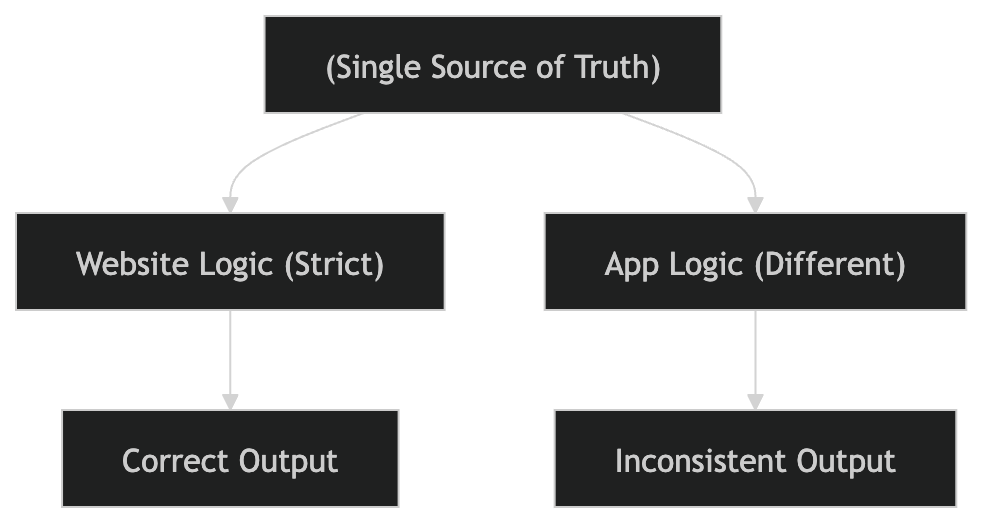
These mismatches usually come from how systems evolve:
- Different implementations: Web and mobile teams often implement logic separately
- Lack of shared rules: No single definition of what “active” means
- Missed updates: One platform updates logic while the other continues using outdated rules
Over time, these small differences turn into visible inconsistencies.
The Fix

Instead of patching the UI, the solution focused on aligning logic across platforms.
1. Unified filtering logic
The app was updated to follow the same rule as the website: only show passes marked as ACTIVE.
2. Correct “Next Class” behavior
The app was sometimes pointing users to past sessions. This was fixed by ensuring it always selects the upcoming valid session, just like the website.
3. Shared logic documentation
A clear reference was created defining how data should be interpreted across platforms, preventing future mismatches.
The Result
After these changes:
- The app and website displayed consistent data
- Users no longer saw outdated or irrelevant information
- The overall experience became predictable and trustworthy
Takeaway
Consistency matters more than presentation. Users don’t think in terms of platforms—they expect everything to work the same everywhere.
When your app and website follow the same logic, the product feels reliable. When they don’t, even correct data starts to feel wrong.
Here are the 5 strongest FAQs—tight, relevant, and directly aligned with your blog:
FAQs
1. What causes data inconsistency between a website and a mobile app?
It usually happens when both platforms use the same data but apply different logic—such as different filters, rules, or update cycles.
2. Is this problem caused by the backend or the frontend?
Most of the time, it’s not a backend failure but a mismatch in how each platform interprets the data. The issue lies in inconsistent business logic.
3. What does “single source of truth” actually mean?
It means there is one definitive source of data, but all platforms must also follow the same rules when using that data to ensure consistency.
4. What is the correct way to fix this issue?
The fix is to standardize logic across platforms—ensuring both the website and app follow the same definitions, filters, and rules.
5. Why is this important for user experience?
Because users expect consistency. If the same account shows different information across platforms, it creates confusion and reduces trust in the product.